Sign up for the ControlAir newsletter.
Get news, updates, and offers direct to your inbox.
ControlAir pressure transducers provide accurate conversion between electrical, pneumatic, and pressure signals for industrial automation, process control, instrumentation, valve actuation, and pneumatic system integration. Designed for exceptional accuracy, repeatability, and long-term reliability, these transducers support demanding industrial environments requiring stable signal conversion and precise control performance.
ControlAir offers a comprehensive range of I/P transducers, E/P transducers, and P/I transducers, including miniature, manifold-mount, explosion-proof, and integrated process control configurations. These pressure transducers are engineered to convert current, voltage, and pneumatic signals into proportional pressure or electrical outputs for accurate operation of valves, actuators, dampers, process systems, and automated equipment.
Showing all 10 results
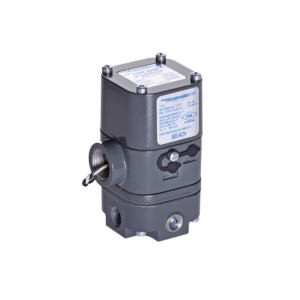
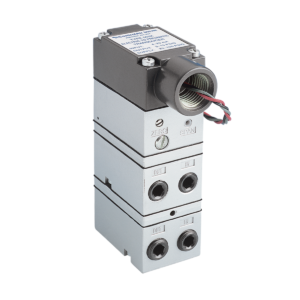
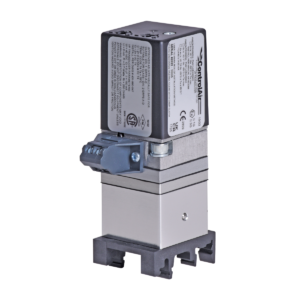
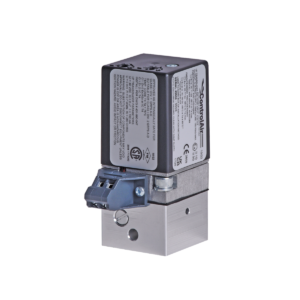
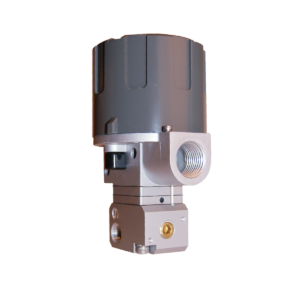
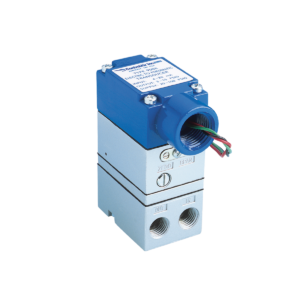
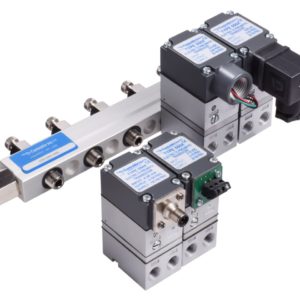
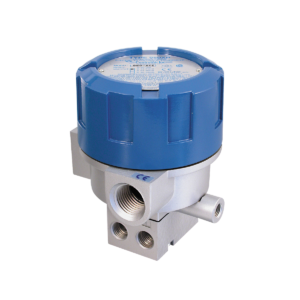
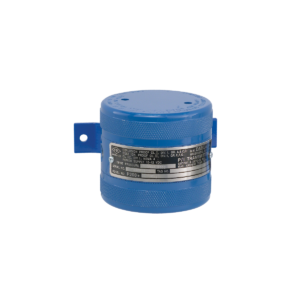
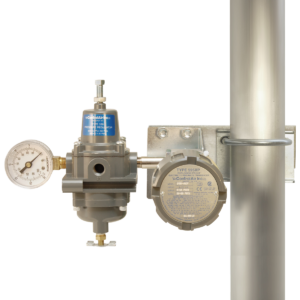
Selecting the correct pressure transducer requires matching input signals, output requirements, pressure ranges, flow capacity, and environmental conditions to your control system. Important considerations include accuracy, response time, stability, certifications, and application compatibility.
I/P transducers convert electrical current signals such as 4–20 mA into proportional pneumatic pressure outputs for valve and actuator control. E/P transducers convert voltage signals into pneumatic outputs for automated control systems. P/I transducers convert pneumatic pressure signals into electrical outputs for PLC, DCS, and monitoring systems.
Applications requiring dynamic pneumatic control benefit from transducers with fast response, stable output pressure, and low drift characteristics. Hazardous or industrial environments may require explosion-proof housings, ATEX certifications, or NEMA 4X environmental protection.
Important selection considerations include:
Proper transducer selection ensures reliable signal conversion, stable process control, and long-term pneumatic system performance.
For additional guidance, review ControlAir’s
Product Selection Guides
How to Determine the Appropriate Regulator
Pressure transducers are used in systems where electrical and pneumatic signals must be accurately converted for proportional control, automation, monitoring, and instrumentation applications.
Common applications include:
ControlAir pressure transducers are widely used in industrial automation, fluid power, process control, valve automation, and instrumentation systems requiring accurate and repeatable signal conversion.
For more application-specific solutions, explore ControlAir’s: Industries We Serve.
When evaluating pressure transducers, focus on performance, reliability, and application compatibility:
High-performance transducers ensure accurate conversion of electrical and pneumatic signals with stable proportional output and repeatable long-term performance.
Fast response times are critical for systems requiring rapid control adjustments and stable automated process performance.
Closed-loop feedback systems and precision circuitry help maintain stable output over time and under changing operating conditions.
Transducers must provide sufficient pneumatic flow capacity to support downstream actuators, positioners, and control devices without pressure lag or instability.
Compatibility with standard industrial current, voltage, and pneumatic ranges ensures seamless integration into automation and process control systems.
Industrial environments may require vibration resistance, tolerance to impure air, corrosion resistance, and environmental protection ratings such as NEMA 4X or IP65.
Miniature and manifold-mount transducers support installations where space is limited or simplified pneumatic integration is required.
Explosion-proof and intrinsically safe configurations support safe operation in hazardous environments where flammable gases or dust may be present.
These factors directly affect control precision, automation performance, and long-term system reliability.
ControlAir pressure transducers are available with certifications and environmental protection options for demanding industrial and hazardous applications:
Explosion-proof pressure transducers are engineered for reliable operation in hazardous environments where safety, durability, and compliance are critical.
ControlAir provides technical resources to support product selection, integration, and pneumatic system optimization:
Product Selection Guides
CAD Models & Product Specifier
Certifications
White Papers
FAQs
These resources provide detailed specifications, installation guidance, and application insights.
Choosing the right pressure transducer depends on your signal type, pressure range, control requirements, environmental conditions, and automation system architecture.
Provide your input and output signal requirements, pressure range, and application details, and our team can help identify the best solution.
Request a Quote
Ask an Expert
Find a Distributor
A pressure transducer converts electrical, pneumatic, or pressure signals into proportional output signals used for control, monitoring, and automation applications.
An I/P transducer converts an electrical signal into pneumatic pressure, while a P/I transducer converts pneumatic pressure into an electrical signal.
Pressure transducers are commonly used in valve control, pneumatic actuation, industrial automation, process instrumentation, robotics, web tension control, and process monitoring systems.
Explosion-proof transducers should be used in hazardous environments where flammable gases, vapors, or combustible dust may be present and safety certifications are required.
Key factors include accuracy, response time, flow capacity, air supply quality, environmental conditions, vibration, and control stability.